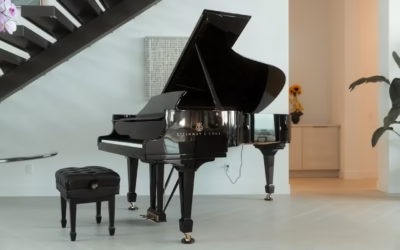

Imagine sitting down at your piano expecting that warm, expressive sound you love only to hear a dull note, a buzzing vibration or a key that refuses to return properly.
You might assume it’s a small issue.
But here’s the problem; piano problems rarely improve by themselves. What starts as a slightly uneven key or frequent tuning can eventually develop into expensive mechanical or structural repairs.
Your acoustic piano is a precision instrument containing thousands of moving components. Changes in temperature, humidity, usage and general wear can gradually affect its strings, hammers, wooden components or action mechanism.
So, how can you tell when your piano needs professional attention?
The Ultimate Guide to Acoustic Piano Maintenance in Kenya: 5 Critical Warning Signs
When you invest in an acoustic piano, you’re buying more than an attractive piece of furniture. You’re investing in an instrument designed to provide beautiful music for decades.
However, without proper acoustic piano maintenance in Kenya, small problems can gradually affect its tone, touch or long-term value.
Read also: What Makes a Grand Piano Sound So Different?
What Are the Warning Signs Your Piano Needs Maintenance?

Featured Snippet: Your piano may need professional maintenance if it has sticking keys, frequent tuning problems, harsh tone, uneven key resistance or unusual buzzing and rattling sounds.
Watch for these five warning signs:
1. Sluggish or Sticking Keys
Do some keys feel slower than others or remain partially depressed after you play them?
Wooden components and key bushings can be affected by environmental changes and regular wear. A professional technician can identify whether the problem requires cleaning, adjustment, regulation or more extensive repair.
2. Your Piano Keeps Going Out of Tune
If your piano sounds noticeably out of tune only a short time after being serviced, don’t simply keep adjusting it indefinitely.
Frequent pitch instability can indicate that the instrument needs more than a basic tuning. Environmental changes, string condition and the piano’s overall structural stability can all play a role.
3. The Tone Sounds Harsh or Dull
One of the easiest maintenance problems to notice is a change in tone.
Over time, piano hammer felt becomes compressed and develops grooves from repeatedly striking the strings. The result can be a harder, brighter or less balanced sound.
Professional piano regulation and voicing can help restore greater consistency and musical expression.
4. Some Keys Feel Heavier Than Others
A good piano should feel relatively consistent across the keyboard.
If certain notes suddenly feel unusually heavy, light, loose or resistant the action may need adjustment. Uneven touch can make playing uncomfortable and may interfere with proper technique.
5. You Hear Buzzing, Rattling or Unusual Vibrations
That mysterious buzzing sound you hear on one particular note shouldn’t automatically be ignored.
Loose components, hardware, bridge issues, soundboard concerns or objects trapped inside the piano can create unwanted vibrations.
If you cannot identify the source, have a qualified piano technician inspect it rather than attempting an internal repair yourself.

How Can You Prevent Expensive Piano Repairs?
Good maintenance is less about waiting for something to break and more about preventing problems from becoming serious.
Control the Piano’s Environment
Where you place your piano matters.
Whenever possible:
- Keep it away from direct sunlight.
- Avoid placing it directly beside frequently opened windows or exterior doors.
- Protect it from extreme temperature changes.
- Keep the surrounding environment reasonably stable.
Schedule Regular Piano Tuning
Regular piano tuning in Kenya helps maintain pitch and allows technicians to identify developing problems before they become major repairs.
For many acoustic pianos, periodic professional servicing is essential with the exact schedule depending on usage, environment and the instrument itself.
Clean Your Piano Correctly
Dust your piano regularly using an appropriate soft cloth.
Avoid harsh household chemicals or excessive moisture on the cabinet, keys and other delicate surfaces. When in doubt use cleaning products and methods recommended for your piano’s specific finish.
See related: How to Compare Piano Prices Before You Buy
Don’t Wait Until Your Piano Becomes Unplayable
Your piano should sound and feel inspiring not become an instrument you avoid because something doesn’t feel right.
The good news is that many maintenance issues can be identified and addressed before they turn into major problems.
If you notice sticking keys, unstable tuning, changes in tone, uneven touch or unusual noises, consider scheduling a professional inspection.
At Wow Pianos, expert piano servicing can help you protect your instrument’s sound, performance and long-term value.
Ready to give your piano the care it deserves? Visit wowpianos.co.ke or contact Wow Pianos to discuss professional piano maintenance and servicing.
Your piano has a story to tell. Don’t let neglected maintenance change its voice.